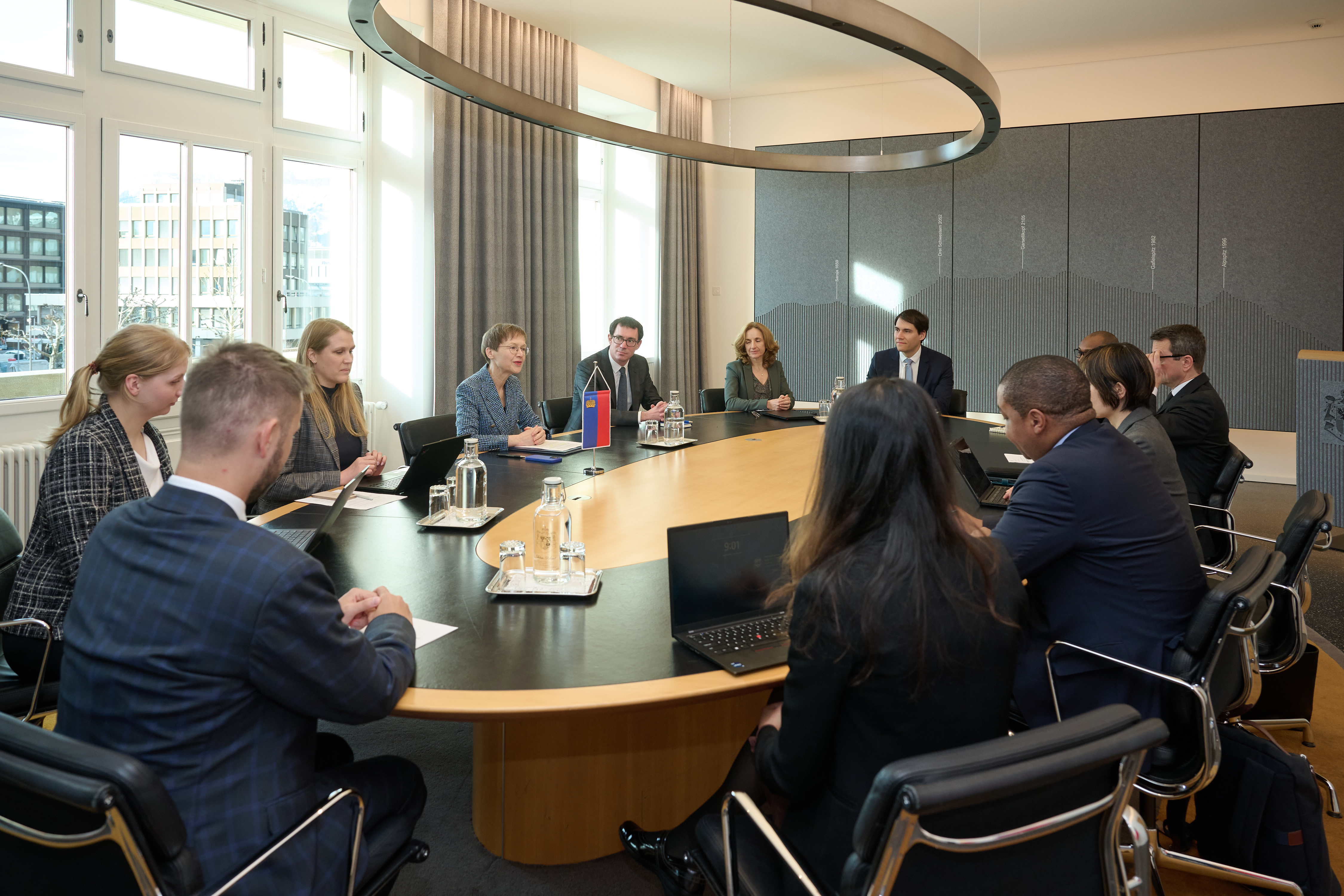
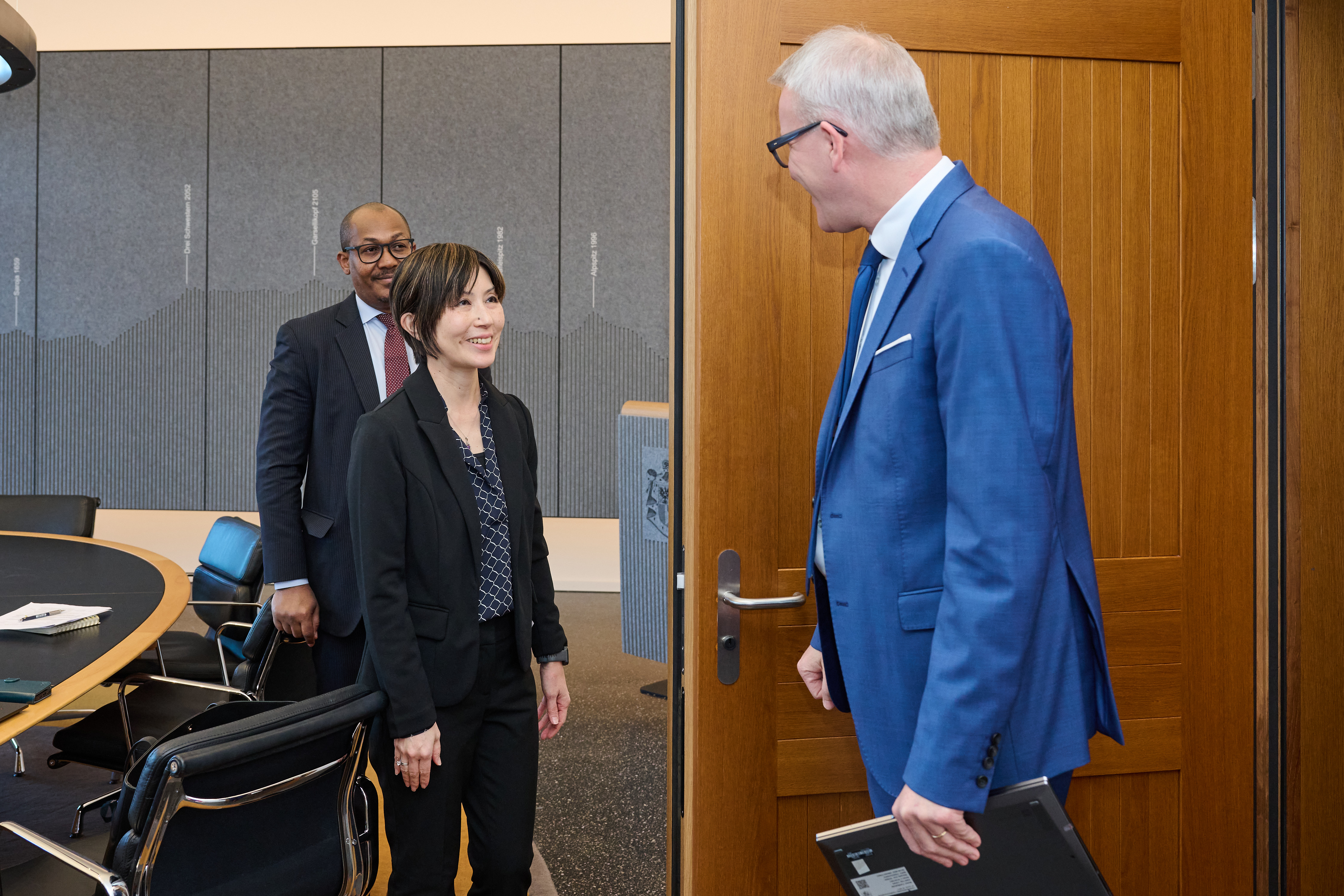
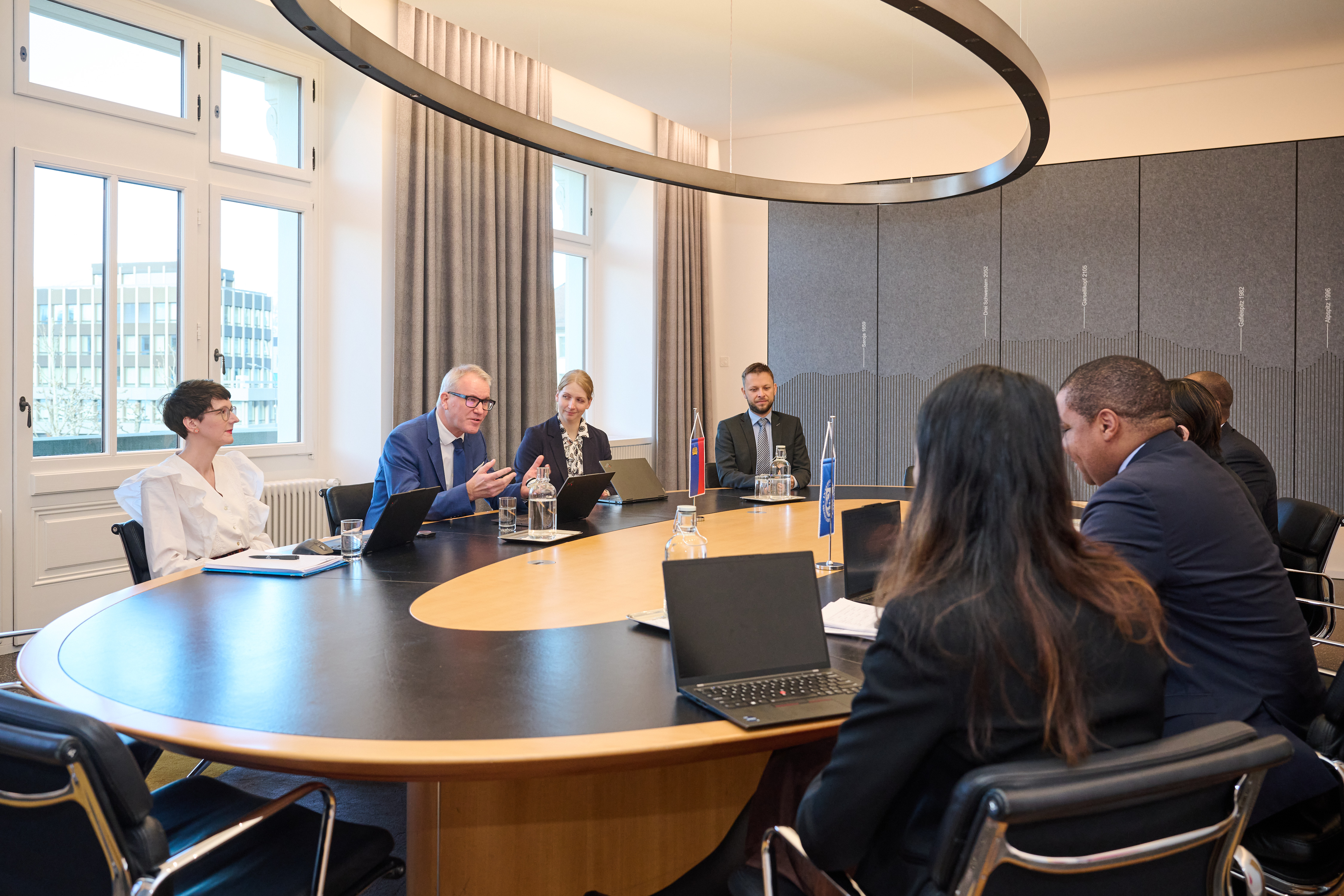
As part of the International Monetary Fund's (IMF) annual Article IV consultations, IMF economists visited Liechtenstein from January 14 to 27 and held a series of discussions with authorities, associations, and companies. The second Art.-IV consultation after Liechtenstein joined the IMF provided in-depth analysis and discussions of the current situation and outlook for Liechtenstein's financial center and economy.
In the Concluding Statement published on January 27, the IMF team emphasizes the challenges Liechtenstein and Europe currently face in light of ongoing geopolitical changes, persistent uncertainty, and the volatile global economic situation. As an open and highly industrialized economy, Liechtenstein is particularly exposed to these developments. At the same time, the IMF highlights the country's historical resilience and sound public finances, with significant reserves and no public debt. Liechtenstein's financial center has proven resilient in the past. Good capitalization and adequate liquidity buffers will remain particularly important for Liechtenstein also in the future.
To preserve Liechtenstein’s stability and success in the future, the IMF points to a number of risks. The ongoing uncertainty requires careful monitoring of the situation and flexible adjustments to the framework conditions in order to cushion the effects of external shocks. Given the size and importance of Liechtenstein's financial sector, it is considered essential to further strengthen financial stability, including through proactive and systematic monitoring of systemic risks and strong micro- and macroprudential supervision. Given current international developments, the IMF also recommends paying close attention to the resilience of both banks and other financial intermediaries in order to preserve stability in the future.
In order to return to a growth path and increase productivity in Liechtenstein in the medium and long term, the strengths of the Liechtenstein labor market, such as the high high skill level and the vocational education system, should be maintained and strengthened in a targeted manner. Forward-looking investments, such as in the areas of digitalization and infrastructure, are also highlighted as important levers. As in the rest of Europe, the IMF further points to rising expenditure needs given aging societies, adjustments to climate change, and increasing security requirements. Prudent budgeting and early financial planning are therefore important to maintain Liechtenstein's high standard of living and stable fiscal situation. In this context, the IMF welcomes the government's intention to respond to these developments at an early stage and to present appropriate proposals for sustainable and future-proof pension systems. Generally, the international organization also emphasizes the importance of timely and detailed macroeconomic data in order to better assess the economic situation in Liechtenstein, identify risks at an early stage, and take timely action. The IMF therefore welcomes the initiatives launched by the government to improve macroeconomic data on Liechtenstein.
The IMF mission to Liechtenstein included conversations with Prime Minister and Minister of Finance Brigitte Haas, Minister of Infrastructure and Education Daniel Oehry, and Chairman of the Executive Board of the Liechtenstein Financial Market Authority (FMA) Mario Gassner. Further talks were held with other experts from the FMA, various government agencies, and associations. A visit to the industrial company Hoval in Vaduz rounded off the program and gave the IMF team an insight into Liechtenstein's innovative industrial sector.
The Concluding Statement serves as the basis for the more detailed Article IV report on Liechtenstein, which will be published at the beginning of April. The Concluding statement is available on the website of the Ministry of General Government Affairs and Finance.